Showing posts with label #nyr12. Show all posts

Monday, 23 July 2012

2012 releases reviewed for AWW: What's in a genre?

In the past week, this blog has posted several lists of reviews written by participants in the Australian Women Writers challenge of books released this year (2012). These lists have been organised as follows:
The intention wasn't to exclude books from the "literary" category. Rather it was to organise titles so readers could find reviews of books that were likely to interest them, and to invite challenge participants to identify books of literary merit which deserve to be regarded as possible future prize winners, despite having "generic" qualities. (This is in keeping with The Stella Prize's aim of including a wider net than what some might deem purely "literary".)

Bookbloggers and publishers were approached for their views on which books they consider literary; invitations for readers and authors to comment were posted on Twitter, Facebook and in the list posts themselves. The aim was to try to identify and include many more books than those published by recognisable literary imprints.

Despite these efforts, some books slipped through the net and at least one author expressed dismay at having her book connected to the label "women's fiction".

My apologies. It's an imperfect system, but it's by far from being prescriptive. It's open to correction and relies on community input. If there are any other titles that should go on the "literary" page, please let me know.

On another point of contention: an author of Young Adult (YA) fiction commented a while ago on the blog, expressing bemusement as to why YA books appear on a separate tab on this website. Many YA books have more in common with the various genres listed above than with each other, and appeal to adult as well as young adult audiences. With this in mind, rather than compiling a separate list of YA books, I ask YA authors and readers to nominate which tally recent (2012) YA releases should appear on. If you can help, please add your comment.

Just for the record. Paddy O'Reilly has accepted an invitation to write a blog post for AWW explaining why she objects to the label "women's fiction". I'll keep you posted.


Sunday, 22 July 2012

Romance 2012: What's being reviewed?

Romances are reputedly the most widely read novels, but are they the most reviewed?

How do you define a "romance"?

One way is to say the story is predominantly about courtship: the tale of a relationship between two beings which either ends "happily ever after" or "happily for now". The sex of the beings isn't important: they may be male/female, female/female, male/male, non-binary gender (or any other variation you can think of - fans of Ursula Le Guin's Left Hand of Darkness will know what I mean). Their nature isn't important either - human, alien, angel, demon, vampire or werewolf. The world and time they inhabit may be equally fluid: contemporary, past or imaginary. Books which have courtship as a subplot, however, are perhaps better described as having "romantic elements".

If books with "romantic elements" are included among the tally of romances, the number of 2012 releases reviewed for the AWW challenge during January to June is marginally more than for other genres tallied so far. If the popular genre of "rural fiction" - or "chook lit" as Twitter wags have dubbed it - is included, the number swells even further.

When canvassed on Twitter, some authors of "rural fiction" objected to having their books labelled as romance, preferring instead to be included among a broader category of "popular", "contemporary" or "women's fiction". With that in mind, only rural fiction books which appear to solely focus on courtship, or were identified by the reviewer(s) as being a romance, have been tallied here.

Otherwise, both straight - or "category" - romances and cross-genre books with "romantic elements", including historical romances, have been listed. (If mistakes have been made - and books have been included which shouldn't have been, or haven't been included and should - please let me know.)

What of Young Adult (YA) and Speculative Fiction titles? Are any of those also courtship stories or books with romantic elements? Should erotica - like Lexxie Couper's Love's Rhythm - be included?*

Have there been romances - or novels with romantic elements - of literary merit published in 2012 that are not listed here?

Tally: 23 books, 16 reviewers, 44 reviews

2012 Romance: Contemporary, Historical, Erotica, Crime, Fantasy, Romantic Comedy
* As Kylie Scott points out in the comments below, Love's Rhythm is more Erotic Romance than Erotica. Are there other 2012 releases in this genre that have yet to be reviewed for the challenge?

Memoir, Biography, History: 2012 Tally

Memoir/Biography/History: 2012 releases

The other day when the tally of literary books was posted, Text publishing tweeted that their biography of Elizabeth and Mary Durack by Brenda Niall should have been included.

Should more nonfiction titles be regarded as "literary"?

The follow is a list of books reviewed for the AWW challenge during January-June.

Disclaimer: If there are errors with release dates, please let me know - reprints make it difficult to judge original publication dates on publishers' websites.

Tally: 10 books, 11 reviewers, 12 reviews

Memoir
Biography
History
Are there other memoirs, biographies or histories published this year that haven't been reviewed for the challenge?
~ ~ ~
Shelleyrae from Book'd Out blog suggests:
Other suggestions from comments:
  • The Censor's Library: Uncovering the Lost History of Australia's Banned Books by Nicole Moore (UQP 2012)
  • Larrikins: A History by Melissa Bellanta (UQP 2012)
  • The Lone Protestor by Fiona Paisley (Aboriginal Studies Press)
Sue T from Whispering Gums blog suggests:
  • House of Fiction by Susan Swingler, about her parents, Elizabeth and Leonard Jolley, and herself. (Fremantle Press 2012

Saturday, 21 July 2012

Historical Fiction: 2012 Tally

Australia has produced a number of award-winning and best-selling writers of historical fiction, including Anna Campbell, Anne Gracie, Anna Jacobs, Stephanie Laurens and Isolde Martyn.While some historical fiction is meticulously researched and takes years to write, the authors don't often appear on lists for literary awards.

An exception is Kate Morton, whose fourth book, The Secret Keeper, will be released later this year. Kate's books have not only been best sellers, they have also repeatedly won Australian Book Industry awards. The Forgotten Garden was also longlisted for The International IMPAC Dublin Literary Award in 2010. 

In the following tally of 2012 releases reviewed between January and June for the challenge, a number of subgenres have been included among the historical fiction titles, including crime, fantasy, speculative fiction and and romance. Have any Young Adult historical fiction titles been missed?

Which of the following, if any, deserve to be included among the tally of "literary" books?

Tally: 17 titles, 22 reviewers, 32 reviews

Titles missed from above tally:
Upcoming releases:


Wednesday, 18 July 2012

Crime 2012 releases: What's being reviewed?

Last weekend the tally of reviews for newly released literary works was posted on this blog, and the question was posed whether "genre" books should have been included. The response from speculative fiction authors on Twitter was a resounding, "Yes!" Of course "genre" books should be included.
But which genres? And what do we mean by "literary" anyway?

The question is timely because, as author P.A. O'Reilly tweeted yesterday, new prizes - including  The Stella Prize - are more open to "judging the work, not the 'genre'." So how do we identify the literary?
 
According to O'Reilly, literary books "reward a second reading with another layer of meaning". Author Claire Corbett goes further: "A literary book doesn't give you what you demand but what you never knew you wanted." Quality writing has subtext, according to Corbett, including non-fiction; too much writing has no subtext, she says, because such craft takes time.

Is it all a matter of craft and layers of meaning? Or are some genres more likely to be considered literary than others?

Clearly some Speculative Fiction titles have no trouble attracting the attention of major literary awards - Corbett's 2011 release, When We Have Wings, for one, was shortlisted for the Barbara Jefferis award, while Meg Mundell's Black Glass was Highly Commended by the judges of the same award.

But what of other genres, such as crime?

When crime writer Peter Temple won the 2010 Miles Franklin Award for his crime novel Truth, an expectation was set up that well-crafted crime novels would attract the attention of literary judges. Last year's inclusion of Kirsten Tranter's psychological suspense novel, The Legacy, and this year's inclusion of Virginia Duigan's The Precipice on the Miles Franklin longlists appear to support this view. Yet PM Newton's 2010 - in my opinion, equally brilliant - The Old School, didn't make the grade. Was it perhaps - being a detective novel - considered too generic?

Which crime novels released in 2012 - including detective, paranormal, YA, historical fiction, crime-romance and nonfiction titles - deserve to be considered "literary" in your view? 

Crime: 2012 releases

The following books released in 2012* and reviewed for the AWW challenge between January and June this year have been divided into subgenres:
  • general/thriller/psychological suspense
  • historical fiction 
  • crime/romance (sometimes referred to as "romantic suspense")
  • crime/paranormal
  • YA/Children's and 
  • True Crime.
*Disclaimer: The release dates on publishers' website don't always accurately reflect the year when the book was first published. If there are any errors, please let me know. EL


Tally: 18 books, 25 reviewers, 43 reviews, 10 publishers.

Publishers: Penguin: 4 books, 10 reviews; Random House: 3 book 7 reviews; ClanDestine Press: 3 books, 3 reviews; HarperCollins: 2 books, 5 reviews; Hachette: 1 book 6 reviews; Pan MacMillan: 1 book, 4 reviews; Pantera Press: 1 book, 3 reviews; Black Opal: 1 book, 1 review; EgmontUSA: 1 book, 1 review; Walker Books: 1 book, 1 review.

General/Thriller/Psychological Suspense

Historical Fiction
Romance
Paranormal
YA/Children's

True Crime

Short Stories
~ ~ ~

Guest author reviews

Of the above authors, Jaye Ford, Katherine Howell, YA Erskine and Helene Young have all reviewed for the challenge (that's why the covers of their recent releases are featured here).

Helene has written multiple reviews, including:
Do you think any of the above books deserves to be regarded as "literary"? Do you know of any other crime books released this year that haven't been reviewed for the challenge so far?

Other crime titles (some not reviewed during January-June period of tally):

Thursday, 31 May 2012

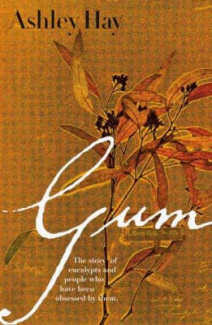
Creative nonfiction - Ashley Hay's Gum: The Story of Eucalypts & their Champions

One of the few male participants in the AWW challenge, Mark Web, yesterday posted an interesting blog about his participation in the challenge. In his post, "In which I become less impressed with my AWWC achievements", Mark notes that, while completing the challenge and achieving his goal of reading and reviewing ten books by women, he gained the impression that he was reading a majority of women writers this year, but his actual tally for reading came out at, roughly, 50/50. His experience demonstrates just how insidious and tenacious unconscious gender bias can be.

As part of my task hosting the AWW challenge, I have approached numerous men of my acquaintance over the past six months or more, including a current editor of a kids literary magazine, a high school English teacher, an ex-book seller, the owner of a writing school, a journalist and a psychologist, a geologist and an ex-judge. Of these, only the latter two expressed any interest in reading and reviewing a book written by a woman for this blog; both, it may be significant to add, are retired and have elected to review nonfiction. The others all had good excuses, none of which, they claimed, had anything to do with gender bias. One did say, though, quite unselfconsciously, that he just wasn't that interested in books written by women.

Today's guest reviewer is author Dr John Martyn. He has elected to review Ashley Hay's 2002 nonfiction title, Gum: The Story of Eucalypts and Their Champions (Duffy & Snellgrove, 2002).

Martyn writes:
 
GumThis highly readable book ought to become a classic. While its core theme is the eucalyptus tree in all its diverse forms, more-especially it's about the people who explored, studied, named, championed, painted and caricatured Eucalyptus and its sister genera, and it even extends to those who propagated and sold the trees in Australia and spread them around the globe. It covers a large spread of Australia's post-colonial history from an intriguing and novel angle.

For example, one chapter follows the life of Ferdinand Von Mueller (or "Baron Blue Gum" as he was known) the young German pharmacist and amateur botanist who became a champion of the eucalyptus tree. He established the National Herbarium of Victoria and in 1857 became the first director of Melbourne's Royal Botanic Gardens. The book also cameos the amazing journeys of Major Thomas Mitchell who accurately surveyed vast tracts of a eucalypt-mantled landscape through which there were almost no roads (and certainly no maps, mobile phones or GPS's to navigate by!). And in which it was often impossible to see the next-nearest hill or ridge-line through a never-ending frieze of forest trees.

These people, and others of their eras, worked amongst a flora that was largely alien to them, across a landscape that was virtually unknown to westerners, whilst also trying to sustain their family relationships at home during long absences in the bush. So as well as covering the establishment of the systematics of a vast and complex flora, the author highlights the ups and downs of their family lives, their interpersonal relationships, their personality quirks and also their inevitable struggles with the bureaucracies and politicians of their day.

The author also reaches into the artistic realm of the eucalypt, which was the subject of many of the magical paintings of artists like Hans Heysen and also the evocative cartoon drawings of May Gibb. Train driver and passionate eucalypt lover Stan Kelly faithfully recorded more than 600 species as watercolours, which have been published in two volumes; he desperately wanted to paint them all except that the botanists were working faster than he was in describing and defining new species, and he had to admit defeat. And the research on this beautiful and sometimes bizarre tree continues – there are decades, probably centuries of study still to be done but, in the meantime, please read this book!

Dr John Martyn was born in Cornwall and came to Australia in 1970 after mapping in the Rift Valley of Kenya for his PhD in geology. Although he has lived in Sydney since 1979, much of his fieldwork as a minerals exploration geologist over the last 30 years has been in Western Australia. He is the author of a number of nonfiction titles, including Field Guide to the Bushland of the Lane Cove Valley and Sydney's Natural World


The Body in the Clouds Note: Ashely Hay's 2010 novel, The Body in the Clouds (Allen & Unwin 2010) has been received to great acclaim.
Hay is also the author of a number of nonfiction titles, including The Secret: The Strange Marriage of Annabelle Milbanke & Lord Byron (2000), Herbarium (2004), and Museum: The Macleays, Their Collections, and the Search for Order (2007).

Wednesday, 16 May 2012

Susanna de Vries' Royal Mistresses of the House of Hanover-Windsor: reviewed by Hazel Edwards

Susanna de Vries is well known for her championing of Australian women in history. Today's guest reviewer, National Year of Reading Ambassador Hazel Edwards, has chosen to review de Vries' new nonfiction title, Royal Mistresses of the House of Hanover-Windsor: Secrets, Scandals and Betrayals. 

‘Every arranged marriage provides a vacancy for a mistress.’ Translation of an old French proverb.

The UK marriage of Prince William and Kate seems a love match.  Charles’ marriage with Diana was arranged.  His ancestors (Hanover to Windsor name change during wartime to remove the apparent Germanic link) married Protestant, European aristocracy for love-less, political reasons, and then kept multiple mistresses.

Former royal marriages were political and religious property arrangements involving land, big dowries, titles and the need for healthy, legitimate male heirs.  The trade of Royal Mistress was precarious, but recognised with temporary prestige and social acceptance.  Thus many of the mistresses sought to accumulate jewels and money before falling from favour and being replaced by a younger model.

In the confusion of titles and names, de Vries tells a readable story, clarifying the roles and contexts. The various, former ‘Princes’ (plural) of Wales seemed to suffer from over- indulgence, lack of a job and the need for the constant attention of a mother-lover mistress who would tolerate gambling, drinking, over-eating and provide all kinds of entertainment to relieve boredom.

Catering for the whims of royalty was a short-term occupation: with easy falls from favour. Hard to say ‘no’ to an all powerful, potential ruler who could ostracise you into poverty, or make your fortune, by providing access to him.

Because the mistresses were so reliant on financial handouts, usually in the form of jewellery, they seemed mercenary, but didn’t have many other options.  Even if they were personable and intelligent, (as well as beautiful and accommodating) they were rarely independent financially. And if a child had to be supported, as in the case of Perdita Robinson who originally had paid work as an actor, and was forced by Prince George of Wales to give up her career, she still lost out on the promised house he was going to gift her. Others had multiple illegitimate children to aristocratic lovers and since DNA testing was not used then, the parent was problematic. Some claimed to be Royal bastards. And others were.

The dilemma was that gambling princes ran up big debts against their eventual gaining of the throne, and had to marry Protestant princesses with big dowries, despite being fond of their mistresses. Religion was an important variable, but money was greater.

Being a mistress appeared to be a trade. But with no trade union. So, many mistresses spent up quickly, on clothes and fashionable property while they could.

Today’s readers will be more familiar with the relationship of Mrs Wallis Simpson and Edward, or Camilla and Prince Charles, both of which are interesting chapters with new content.

However, some of the lesser known, married mistresses appeared to have a genuine fondness for their prince and tried to keep him healthier and doing some actual kingly business.  Many retiring husbands appeared to benefit financially or politically from their wife becoming the royal mistress. Winston Churchill’s mother Lady Jennie Churchill, and the heiress, Daisy, Countess of Warwick who in later life created worthwhile occupations for herself, make fascinating reading. Alice Keppel became the love of Edward's life and the great grandmother of Mrs Camilla Parker Bowles, now Duchess of Cornwall. Camilla's story and that of her Aussie rival, Lady Dale Tryon are included.

Edward V11 (later Duke of Windsor) was a sad case having suffered an attack of mumps that ensured he remained physically and mentally immature and obsessively dependent upon manipulative Mrs Simpson.

The ‘Royal Mistresses’ title will attract readers, as will the subtitle of ‘Secrets, Scandal and Betrayals’ but de Vries' ‘readability’ in portraying well researched history in an accessible fashion for the general reader, make all her books the kind that avid readers share.

De Vries is especially good at placing her characters in context. The endnotes are well documented and the index works, and the photos indicate the beauty of some of the mistresses. But I found it hard to be sympathetic to the expensive mistress lifestyle and aristocratic spending when the general population was struggling, and this included tenants providing the income from the Prince of Wales' estates. I preferred reading about the heroic women in de Vries' other histories of significant working women during wartime and pioneering times.
Mini Purple Hazel .jpgAs well as being a well-known children's writer, Hazel Edwards is the author of Writing a Non Boring Family History. She has also contributed to the Aussie Heroes series with Sir Edward ‘Weary Dunlop’ and Professor Fred Hollows.

de Vries, Susanna, Royal Mistresses of the House of Hanover-Windsor: Secrets, Scandals and Betrayals ($34.95) ISBN: 978-0-9806216-2-1, First Published 2012

Other books by Susanna de Vries: